
Quick answer: Yes. Ten-minute activity sessions can contribute to your weekly exercise total. Moderate- or vigorous-intensity aerobic activity counts even when divided into short sessions; ten minutes is not a minimum requirement. Adults should work toward at least 150 minutes of moderate aerobic activity—or 75 minutes of vigorous activity—plus muscle-strengthening activity on two days each week. Short sessions are useful building blocks, not a guarantee of every benefit associated with longer training. (cdc.gov)
If you are beginning or returning to exercise, start with a session you can manage comfortably. You do not need to turn every spare ten minutes into a hard workout. The examples below are planning tools for generally healthy adults, not individualized prescriptions.
1. What counts—and why ten minutes is not a magic number
Think about your weekly activity total, rather than whether each session is long enough to deserve the word “workout.”
CDC guidance allows aerobic activity to be spread throughout the week in smaller chunks. Some activity is better than none, even before you reach the recommended amount. Muscle-strengthening activity is an additional part of the guidance, not something that walking automatically replaces. (cdc.gov)
For aerobic minutes, effort matters:
- Moderate intensity: You can talk, but not sing.
- Vigorous intensity: You can say only a few words before pausing for breath.
These are practical rules of thumb, not laboratory measurements. The same activity can feel different depending on your fitness and abilities. (cdc.gov)
A comfortable stroll can still be worthwhile movement. However, do not automatically record every minute spent standing, stretching or walking slowly as moderate aerobic exercise.
Here is the basic arithmetic:
Three ten-minute brisk walks on five days = 150 minutes per week.
By contrast, one ten-minute walk on five days totals 50 minutes. That is a useful starting point, but it is not the same weekly amount. Splitting activity changes its scheduling—not its total duration.
2. What research says about short versus continuous exercise
The strongest comparison is between sessions with the same total exercise time, activity type and intensity. Otherwise, differences may reflect how much exercise people did rather than how they divided it.
A 2019 review examined 19 studies involving 1,080 community-dwelling adults. It found no detected differences between accumulated and continuous exercise for cardiorespiratory fitness or blood-pressure outcomes. This supports dividing activity into shorter sessions, but does not establish that every short workout reproduces every outcome of longer training. (pubmed.ncbi.nlm.nih.gov)
Individual trials also show why the dose and population matter:
- A 2002 walking trial: Twenty-one previously sedentary adults, averaging about 45 years old, completed two six-week walking programs. One used three ten-minute walks per day; the other used one 30-minute walk, both on five days weekly. Both improved estimated aerobic fitness and some blood-lipid measures. The study was small and short-term—not proof of identical long-term disease prevention. (pubmed.ncbi.nlm.nih.gov)
- A 2005 lower-volume trial: Forty-eight sedentary adults were assigned to one 20-minute walk, two ten-minute walks, or no training. Walking occurred three days weekly for 12 weeks; 32 participants completed the study. The exercise groups did not show changes in several measured outcomes, including blood pressure, body mass and blood lipids. That result does not mean the walking had no value; it limits claims about those outcomes at that dose. (sciencedirect.com)
The practical lesson is to use short sessions to accumulate activity—not to assume that ten minutes alone is a complete exercise program. These walking studies also do not establish equivalent results for muscle growth, sport skills or every other training goal.
3. Make a ten-minute aerobic session simple
Choose an activity that fits your surroundings and abilities: brisk walking, cycling or another accessible aerobic option. You do not need special intervals or all-out effort for the session to count. (cdc.gov)
An illustrative ten-minute walk could look like this:
| Part of the session | Example |
|---|---|
| First 2 minutes | Walk easily and let your breathing rise gradually |
| Middle 6 minutes | Walk at a comfortable moderate effort |
| Final 2 minutes | Ease back down |
Light activity before and after aerobic exercise provides a warm-up and cool-down. The timing above is simply an example, not a required formula. (nia.nih.gov)
Count the effort honestly. If only the middle six minutes meet the moderate-intensity talk test, record six moderate minutes—not ten. If you want ten moderate minutes, allow additional time for the easier beginning and ending.
Before leaving, check the route, weather and walking surface. Have an indoor alternative ready for days when outdoor conditions are unsuitable. NIA guidance specifically recommends considering weather and surroundings when exercising outside. (nia.nih.gov)
Your first planning question should be, “Where can I do this regularly?” rather than, “How can I make it exhausting?”


4. Build a week around your actual work pattern
The following schedules are illustrative planning examples, not studied programs. Their totals assume that all listed aerobic minutes are genuinely moderate intensity; allow extra time for easier warm-up and cool-down movement.
Example A: A desk worker with predictable weekdays
| Days | Aerobic plan | Moderate minutes |
|---|---|---|
| Monday–Friday | 10 minutes before work, 10 at lunch and 10 after work | 150 total |
| Two separated days | Add strength activity covering the major muscle groups | Recorded separately |
The calculation is 5 days × 3 sessions × 10 minutes = 150 minutes.
If three daily sessions are unrealistic, begin with one. That produces 50 minutes across five days. Keep the achievable appointment and add another slot when you are ready, rather than abandoning the plan because it does not yet reach the target.
Example B: Irregular workdays
| Day type | Aerobic plan | Moderate minutes |
|---|---|---|
| Four demanding days | One 10-minute session each day | 40 |
| Two less-demanding days | Three 10-minute sessions each day | 60 |
| One available day | Two 25-minute sessions | 50 |
| Weekly total | 150 |
This mixed approach does not require every session to be short. Use brief opportunities on busy days and longer ones when they fit.
Choose two feasible strength days as well. Review your actual schedule each week; do not attach the whole plan to a clock time that only works when your shifts stay unchanged.
CDC recommends choosing enjoyable activities that match your abilities and tracking your weekly activity. A basic calendar or paper log is enough. (cdc.gov)
5. Use strength breaks without mistaking them for a full-body plan
Short strength sessions can contribute to your routine. Bodyweight exercises, weights and resistance bands are recognized strengthening options. The weekly aim includes all major muscle groups—not just the muscles used in your favorite exercise. (cdc.gov)
For a beginner-friendly partial strength break, try the following example:
- Sit-to-stand: 5 controlled repetitions. Use a solid, stable, non-wheeled chair. Lean forward slightly, stand, then lower yourself slowly. Use assistance if needed.
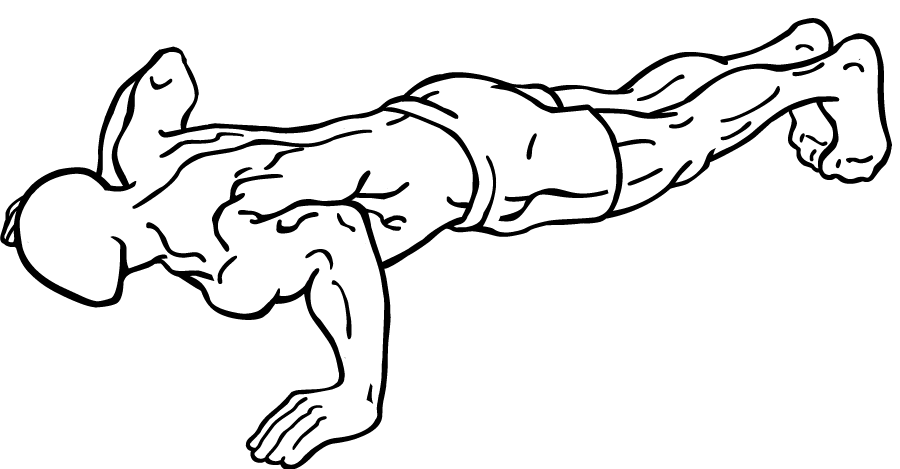
- Wall push-up: 5–10 repetitions. Place your hands against a wall at chest height. Keep your back straight as you bend and straighten your arms.
- Light biceps curl: 5 repetitions. Keep your upper arms beside your body and lower the weights slowly. This can also be done seated.
These movements and basic setup cues come from NHS home-strength guidance. Start with fewer repetitions if necessary. (nhs.uk)
Rest as needed between movements. If you feel comfortable and still have time, repeat the sequence; there is no need to rush through it to fill ten minutes. Breathe throughout rather than holding your breath. (nia.nih.gov)
This break is not a complete full-body routine. It does not adequately address every major muscle group. Use it as one part of a broader strength plan, with other suitable exercises addressing the back, hips and abdomen.
As movements become easier, gradually increase repetitions or choose an appropriate resistance. CDC describes sets of 8–12 repetitions as one practical approach to strengthening. The challenge should come from muscular effort, not uncontrolled movement. (nhs.uk)

6. Choose habit cues and a smaller fallback session
Give each activity opportunity a specific starting cue. For example:
- “After I finish lunch, I walk my planned route.”
- “When I close my work laptop, I begin my strength break.”
- “After arriving home, I change shoes before sitting down.”
These are planning suggestions, not promises that a habit will form within a particular number of days.
Also decide what happens when the normal plan becomes impossible:
| Normal plan | Possible fallback |
|---|---|
| Ten-minute outdoor walk | Five-minute indoor walk |
| Planned strength session | One controlled set of a suitable exercise |
| Three activity slots | Keep one slot instead of cancelling all three |
| Fixed evening appointment | Use the first safe break available that day |
A fallback preserves an opportunity to move, but it does not earn the same activity total as the original plan. Record what you actually completed.
Keep two separate log entries:
- Moderate or vigorous aerobic minutes
- Strength exercises, sets and repetitions
At the end of the week, ask which session was repeatedly missed. Change that session’s cue, location or duration before adding more commitments. Your log should help you adjust the plan, not serve as a scorecard for an ideal week.
7. Check progress, common mistakes and safety limits
Use a brief weekly review:
- Did the aerobic effort match the minutes recorded? Apply the talk test rather than assuming every walk was moderate.
- Did strength work cover the whole body across the week? Repeating only push-ups leaves gaps.
- Was the schedule realistic? Keep the opportunities that worked and revise the ones that did not.
- Are you counting sessions or expecting results? Completing activity is measurable; a guaranteed weight-loss or fitness timeline is not established by these examples. (cdc.gov)
Avoid turning “short” into “maximum intensity.” You can accumulate moderate activity without making every break vigorous. If you have been inactive, CDC advises talking with your doctor before starting vigorous exercise. People with chronic health conditions should discuss appropriate types and amounts of activity with their clinician. (cdc.gov)
Stop if exercise causes pain or you become unwell. Seek professional advice if you have an injury, concerning symptoms, recent surgery, or uncertainty about suitability. Pregnancy and recent childbirth also call for appropriate guidance rather than assuming these examples apply unchanged. (nhs.uk)
The takeaway: Ten-minute workouts are useful when they make regular activity possible. Start with a manageable session, count its actual effort and duration, add strength separately, and build a week you can repeat—not a perfect week that only exists on paper.