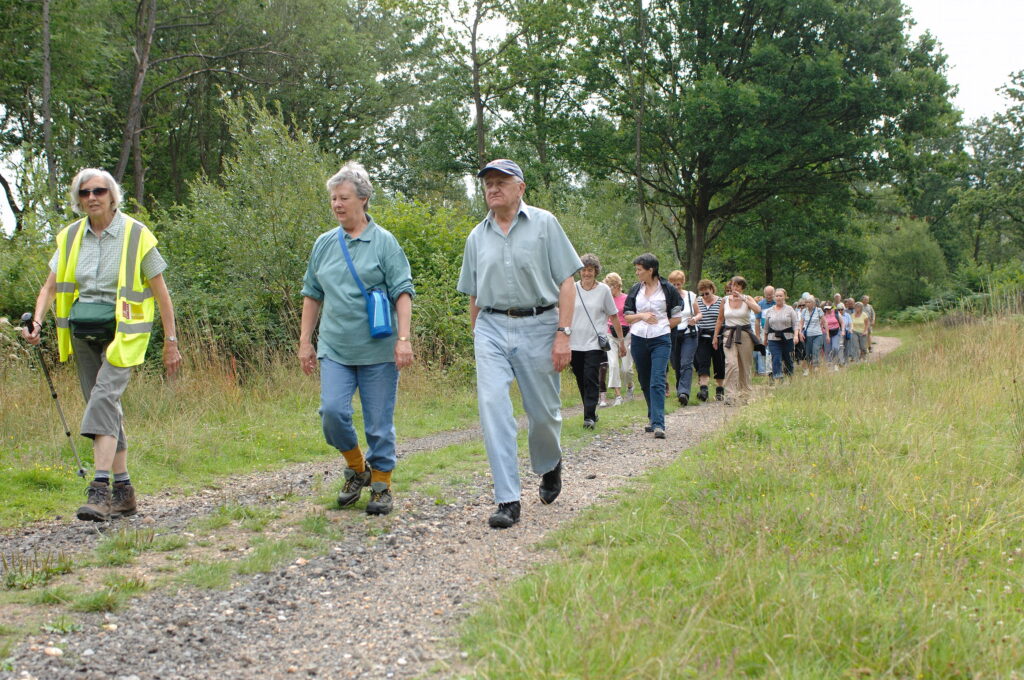
Quick answer: Restart with an amount of activity you can manage comfortably, then build gradually. A short, easy walk and a few controlled strength exercises are reasonable starting options—not a requirement to complete a hard workout. Federal guidance recommends that inactive adults start small and work toward weekly activity targets over time. The four-week example below is an illustration, not a personal prescription or a deadline. (odphp.health.gov)
1. Treat activity guidelines as a destination, not your first assignment
The CDC recommends that adults work toward at least 150 minutes of moderate-intensity aerobic activity each week, or 75 minutes of vigorous activity, alongside muscle-strengthening activity on at least two days. Strength work should eventually involve all major muscle groups. Some activity is better than none, and you can divide activity into smaller sessions. (cdc.gov)
Those targets do not mean your first week must include five brisk, 30-minute walks. If you have been inactive, federal guidance explicitly recommends starting with smaller amounts and building up. There is also no minimum 10-minute session requirement for activity to count toward the aerobic recommendations. (odphp.health.gov)
For your first month, use a simpler planning question:
“What can I repeat without making the next session feel unmanageable?”
Write down a starting schedule based on your current abilities and available time, rather than the workouts you used to do. For example:
- A five-minute walk after lunch on four days.
- One short strength-practice session in the first week.
- A weekly check of effort, symptoms and scheduling difficulties.
These are illustrative choices, not proven optimal doses. You may need less, or you may already comfortably manage more.
2. Check whether you need medical advice before restarting
A long break alone does not establish what exercise is appropriate for you. Consider why you stopped, whether your health has changed and whether ordinary activity causes symptoms.
If you have a chronic condition such as heart disease, diabetes or high blood pressure, ask your healthcare professional what types of activity are safe and how to build them into your routine. Chest pain or dizziness during activity also warrants medical attention. (nhlbi.nih.gov)
If standing, walking or balance is difficult, do not force the example below to fit. Seated exercise may offer another starting option; the NHS advises checking with a healthcare professional if you are unsure whether its seated exercises are suitable. (nhs.uk)
During a session, stop and seek help right away for warning signs such as chest pressure or pain, extreme shortness of breath, or dizziness. These are not signals to “push through.” Exercise-related joint, foot, ankle or leg pain also deserves discussion with a healthcare professional. (niddk.nih.gov)
Call 911 if you think you may be having a heart attack, even if you are uncertain. Possible symptoms include chest discomfort, upper-body pain, shortness of breath and sudden light-headedness. Do not drive yourself to the hospital. (nhlbi.nih.gov)
This article is general education for adults returning to ordinary exercise. It is not an injury-rehabilitation, pregnancy, postpartum or disease-specific exercise plan.
3. Choose easy cardio and check effort while you move
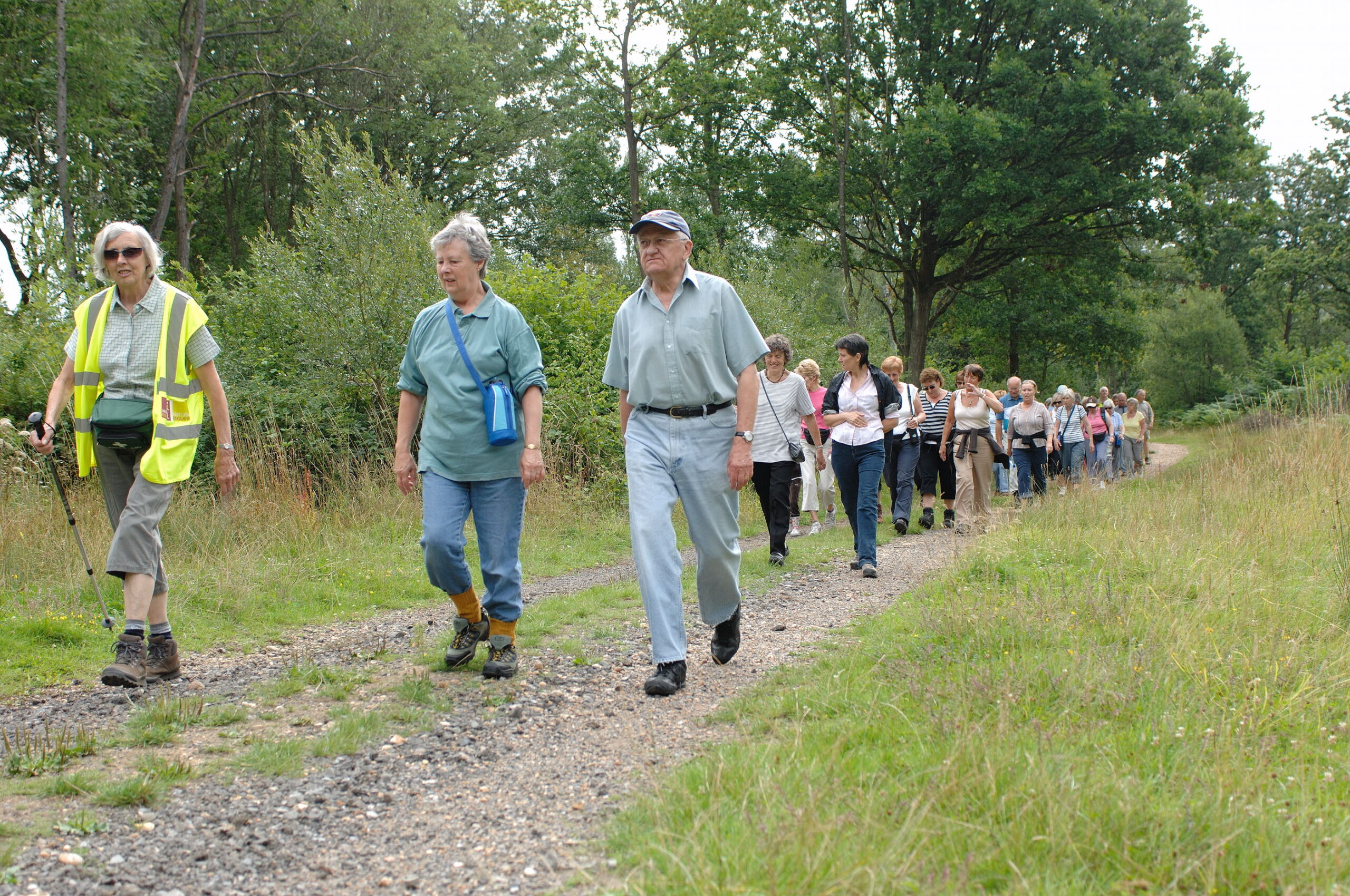
Choose an activity you can access without much preparation. Walking is one option; easy cycling, dancing or water-based activity may suit other preferences and abilities. Enjoyment and practicality matter when choosing something to repeat. (odphp.health.gov)
For this first-month example, begin at a deliberately easy pace. Use conversation as a practical effort check:
- Easy starting effort: Aim to speak comfortably in full sentences.
- Moderate intensity: The CDC describes this as being able to talk but not sing.
- Vigorous intensity: You cannot say more than a few words without pausing for breath.
The same activity can feel different to different people. Walking may be moderate for one person and vigorous for another, depending on fitness and health. Do not judge your effort only by someone else’s speed. (cdc.gov)
For a walk, start more slowly for the first few minutes and slow down again toward the end. Wear comfortable, supportive shoes and choose a safe route. (niddk.nih.gov)
For your first outing, consider a short route near home or an indoor route with an easy stopping point. Avoid making a distant destination the reason you must keep going.
Important distinction: Easy movement is a useful starting step, but easy minutes are not automatically moderate-intensity minutes. Keep that distinction when comparing your activity log with the 150-minute guideline. (cdc.gov)
.jpg)
4. Add a short strength-practice session
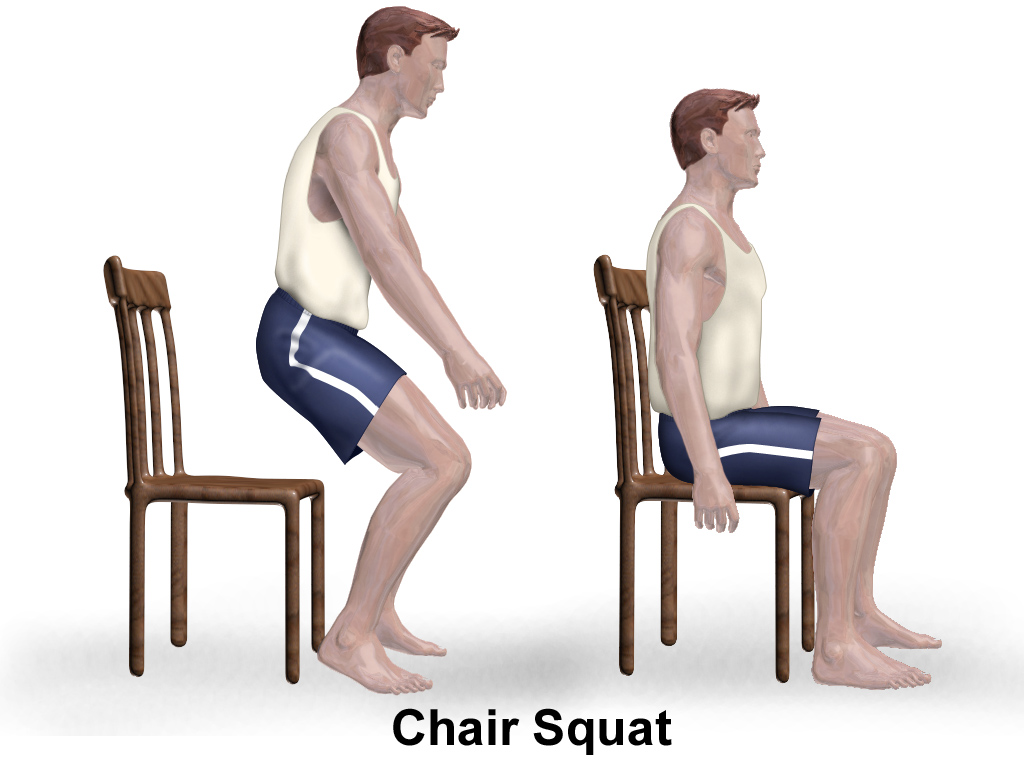
You do not need to restart with your old weights or a demanding circuit. The NHS recommends building strength exercises slowly and gradually increasing repetitions. Use a solid, stable chair without wheels that will not slide, plus a clear wall and optional light weights. (nhs.uk)
The following is an illustrative introductory session, using movements described in NHS guidance:
| Movement | Basic setup and cue |
|---|---|
| Sit-to-stand | Sit with feet hip-width apart. Lean slightly forward, stand slowly, then lower with control. |
| Wall push-up | Place hands against a wall at chest height. Keep your back straight as you bend your arms and push back. |
| Supported calf raise | Hold the back of a stable chair. Slowly lift and lower your heels. |
| Light biceps curl | Keep arms by your sides, bend your elbows to lift light weights, then lower slowly. |
Use controlled movements rather than rushing through repetitions. (nhs.uk)
For this example, try one set of five repetitions per movement, stopping sooner if necessary. Rest between movements until you feel ready; a minute is a possible starting allowance, not a required limit. Keep the early sessions as practice rather than maximum-effort tests.
If a movement is too difficult, reduce the range or repetitions. If you cannot perform it comfortably and steadily, leave it out and seek guidance on a suitable alternative.
This small session is not a complete long-term strength program. The eventual guideline includes the legs, hips, back, abdomen, chest, shoulders and arms; this starter selection does not adequately train every group. (cdc.gov)

5. Use this adaptable four-week example
This schedule has not been tested as a specific program. Its purpose is to illustrate the source-backed principle of starting slowly and adding activity over weeks or months—not to promise a particular result. (odphp.health.gov)
Use it only if the starting amounts are manageable. Repeat a week, shorten sessions or choose a more suitable activity when needed.
| Week | Easy cardio example | Strength-practice example | Main check |
|---|---|---|---|
| 1 | Four five-minute walks | One session using the starter movements | Is the starting amount comfortable and repeatable? |
| 2 | Keep the same four five-minute walks | Add a second session only if ready | Can you repeat the session with controlled movement? |
| 3 | If ready, extend each walk to eight minutes | Keep two sessions; retain the same repetitions | Does extra walking time remain manageable? |
| 4 | If ready, extend each walk to ten minutes | Keep two sessions; retain the same repetitions | What amount can you realistically continue? |
Schedule the two strength sessions on separate days—for example, Tuesday and Friday. Walks can share those days, or you can spread them across the week. Leave unscheduled days available for ordinary movement or rest.
Worked example: Suppose you comfortably complete week 1. Four walks multiplied by five minutes gives 20 scheduled walking minutes. Week 2 keeps that amount unchanged while you practice strength twice. If you then extend each walk to eight minutes, week 3 contains 32 walking minutes. Four ten-minute walks in week 4 give 40 minutes.
Those totals describe the example, not a required progression. They also do not establish that the walks were moderate intensity. Ending the month below the full guideline is compatible with a gradual restart; there is no requirement here to reach 150 minutes by day 30. (odphp.health.gov)
6. Decide whether to progress, repeat or reduce
Gradual progression means increasing activity in response to how you manage it, not automatically because another week has passed. Federal advice supports starting slowly and increasing duration and frequency over time. (odphp.health.gov)
Use these practical checks before changing the example:
Consider a small increase when:
- You completed the current schedule without concerning symptoms.
- The intended effort remained manageable.
- You could control your strength movements.
- The schedule fits your actual week.
Repeat the same amount when:
- Sessions were manageable, but the habit still feels difficult.
- You missed activities because the schedule was unrealistic.
- You are unsure whether more activity would be tolerable.
Reduce or stop when:
- You feel unwell or develop warning symptoms.
- Activity causes pain rather than ordinary mild discomfort.
- You need to abandon control to finish the repetitions.
Some minor muscle soreness can occur when becoming active. NIDDK advises going easier and building slowly if activity leaves you feeling sick or in pain, and consulting a professional about exercise-related joint or lower-limb pain. (niddk.nih.gov)
For clarity, change one main feature at a time: duration, frequency, repetitions or resistance. This is a planning tool, not a universal scientific rule. It makes it easier to identify what changed if the new workload becomes difficult.
7. Avoid common restart mistakes and plan the next month
Mistake: Trying to reclaim your old routine immediately.
Use your current starting point. Previous achievements are not instructions for this week.
Mistake: Counting every walking minute as moderate cardio.
Check effort rather than relying only on the clock. Comfortable, easy movement and guideline-level moderate activity are not identical. (cdc.gov)
Mistake: Increasing everything together.
Do not turn longer walks, more strength sessions and heavier weights into one compulsory weekly upgrade. Choose a single manageable change.
Mistake: Treating a missed session as a debt.
Resume your planned routine rather than adding a punishment workout.
Mistake: Tracking only completed minutes.
Add a brief note about effort and any symptoms. Federal guidance encourages keeping an activity record and setting realistic goals. (odphp.health.gov)
A useful log entry might read:
“Tuesday: five-minute easy walk; conversation comfortable. One set of starter exercises; movements controlled.”
At the end of four weeks, review what you can sustain. Keep the parts that fit, adjust those that do not, and continue building toward a mix of moderate cardio and strength work that covers all major muscle groups. Adults 65 and older also need balance activity. (cdc.gov)
The takeaway: Start with a repeatable amount, check effort and symptoms, and build gradually. The calendar is a reminder to review your plan—not an order to make every workout harder.